Southwest Virginia Museum
10 West First St. N., Big Stone Gap, VA 24219; Phone: 276-523-1322; Email: SWVAMuseum@dcr.virginia.gov
Latitude, 36.863332. Longitude, -82.779592.


Photos and video

This content takes priority over any other information provided on this park's webpage.
The Museum is closed Jan. and Feb.
The park is available to book private events and outdoor weddings. Interested parties should call the park at 276-523-1322 for further details and setup options. The museum's event room, the Victorian Parlor, is available for rental for private events. Please call the park for more information at 276-523-1322.
Poplar Hill Cottage, a three bedroom, two bath overnight facility is available for rental by calling the park office at 276-523-1322.
Please review the Virginia State Parks Know Before You Go information before you visit.
General Information
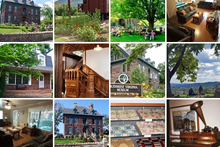
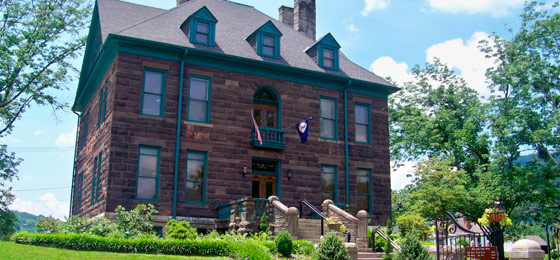
A National Historic Landmark, the Southwest Virginia Museum is in an 1890s Victorian stone mansion with an original oak interior. The museum's collection includes more than 60,000 pieces and state of the art exhibits telling the story of the exploration and development of Southwest Virginia from the pioneer era of the 1700s to the mining "boom and bust" era of the late 1800s. The museum also offers many interpretive and special events. The gift shop features unique items representative of the area's history and crafts made by regional artisans. The park offers facilities for meetings, weddings and other special occasions, and the charming Poplar Hill Cottage is available for overnight guests.
Two floors are accessible for visitors unable to climb stairs. Click Other Info on the left for more information.
Hours
Park is closed in January and February. From Memorial Day through Labor Day, the park is open Monday-Friday, 10 a.m.-4 p.m., Saturday, 10 a.m. to 5 p.m., and Sunday, 1 p.m.-5 p.m., the rest of the year, the hours are Tuesday- Friday, 10 a.m.-4 p.m., Saturday, 10 a.m. to 5 p.m., and Sunday, 1 p.m.-5 p.m. The park is closed Thanksgiving and Christmas days.
Location
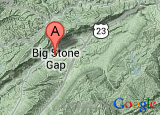
The museum is in Big Stone Gap, off U. S. 23, at the corner of W. First Street North and Wood Avenue. It is 14 miles south of Norton and 35 miles northwest of Kingsport, Tenn. The facility is nestled in the Appalachian Mountains. Neighboring areas of Kentucky, Tennessee and North Carolina are only a one to two hour drive away. Its address is 10 West First Street North, Big Stone Gap, VA 24219.
Latitude, 36.863332. Longitude, -82.779592.
Drive Time: Northern Virginia, 9 hours; Richmond, 7 hours; Virginia Beach/Tidewater, 9 hours; Roanoke, 4 hours; Knoxville, Tenn., 2 hours; Lexington, Ky., 2.5 hours; Winston-Salem, N.C., 3 hours.
Park Size
1.5 acres.
Share this page


Cabins, camping
OVERNIGHT FACILITIES
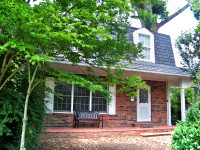 Poplar Hill Cottage is the perfect mountain getaway. The quaint, garden-themed cottage, located in historic Poplar Hill, is furnished with reproduction furniture. It has three bedrooms, two full baths, a kitchen and an ample living area with a fold-out sofa. The cottage sleeps up to eight people.
You'll find tasteful furnishings as well as a microwave, refrigerator, oven, washer-dryer, dishes, cooking utensils, silverware, and glassware. A hairdryer is also included. There's no phone, but most cell phones work here. A TV and Wi-Fi access are included.
No linens are provided. Guests must bring their own linens and towels.
Check-in is 4 p.m., and check-out is 10 a.m. There is an overnight pet fee. No smoking. Click here for overnight accommodation fees. Reservations can be made up to 11 months in advance in person or by calling (276) 523-1322 between 10 a.m. and 4 p.m., Monday through Friday. Full payment must be received by the Southwest Virginia Museum within 14 days after the reservation is made. Visa and MasterCard are accepted over the phone, and checks and money orders are acceptable. $30 is charged for cancellations made at least 90 days before the arrival date, and $30 per night is charged for cancellations made less than 90 days beforehand.
Visit a Flickr photoset of the museum's Poplar Hill Cottage.
For information on the availability of other parks' overnight accommodations, particular park amenities or to make a reservation, you can reserve online or call 1-800-933-PARK. Click here for park fees.
Click here for details on reservation cancellation and transfer policies. A fee is charged per pet per night for cottage stays.
Cabins
Poplar Hill Cottage - see above.
Recreation
TRAILS
The museum is an Audubon Bird Sanctuary, and many various songbirds can be seen on the grounds. A permanent outdoor exhibit, the Southwest Virginia Walk of Fame, showcases the region’s heritage. The exhibit advances the knowledge, awareness and appreciation of renowned Southwest Virginians, past and present, who have made significant contributions to the commonwealth, the nation and the world. The museum is within walking distance of the Bullitt Park/Greenbelt Trail. See more information on this trail.
SWIMMING
None at this park.
FISHING, BOATING
While there’s no fishing within this 1.5-acre park, the Powell River’s headwaters in Wise County offer good fishing for redbreast sunfish, rock bass, smallmouth bass, catfish and muskie. There are no public access points on the Powell River so anglers should get permission from the landowner before accessing the river from private land. Lake Keokee is also nearby in Lee County. The lake offers largemouth bass, bluegill, redear sunfish and channel catfish.
HORSES
None at this park.
Park Trail Guide
Not ListedNearby Attractions
Wilderness Road State Park, Lee County. Natural Tunnel State Park, Scott County (camping). John Fox, Jr., Museum, Harry Meador Coal Museum, Trail of the Lonesome Pine Outdoor Drama and the June Tolliver House in Big Stone Gap. Virginia Heritage Music Trail.
Picnic Shelters
The museum's beautifully maintained grounds are ideal for a picnic. The Victorian Garden has tables and chairs for up to 18 people and is perfect for outdoor weddings.
Meeting Space and Facilities
MEETING FACILITIES
The park offers facilities for meetings, weddings and other special occasions.
The Victorian Parlor is a popular setting for business and club meetings, seminars, training and socials.
Weddings are handled with a special touch at the park. Learn More.
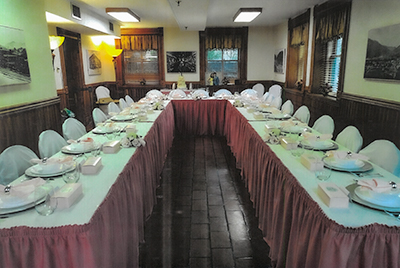
Meeting style setup
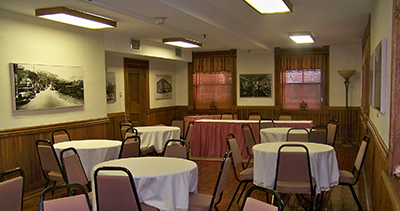
Setup for up to 30 people
VISITOR CENTER, GIFT SHOP
A gift shop on the first floor is stocked with various items reflecting the region's history and culture. The shop offers Victorian-themed collectibles, historically themed children’s toys and games, locally produced crafts, Virginia State Parks souvenirs, many books about local and regional history, and much more. Check out books written by world-renowned authors John Fox Jr. and Adriana Trigiani, both called Big Stone Gap home. Also, visit the museum's Gallery in the Gap, which features crafts made by regional artisans.
RESTAURANT
None at this park.
LAUNDRY
None at this park.
ENVIRONMENTAL EDUCATION CENTER
None at this park.
SPECIAL FEATURES
The museum is a popular place for weddings. Click here to learn more about wedding offerings here.
Other Info
ACCESSIBILITY
Parking spots in the museum's rear and a sidewalk leading to the building are universally accessible. Two lifts provide access to the first floor and basement. The museum's restroom is not accessible. On request, however, staff will make available to disabled guests a restroom in the adjacent carriage house, which is closed to the public. Visitors in wheelchairs may visit the grounds, most of which are grassy and flat. Although motorized vehicles are not permitted on the trails, those using electric wheelchairs and electric scooters that meet the federal definition for wheelchairs are allowed there.
NATURE AND HISTORY PROGRAMS
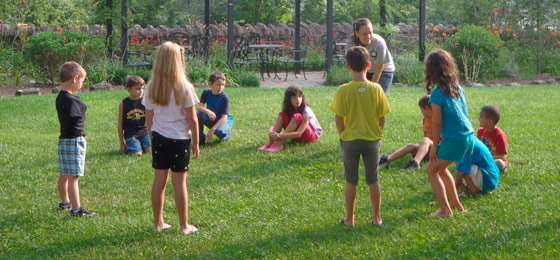
The museum offers a variety of workshops, children's activities, musical offerings and interpretive programs throughout the year. Programming highlights include:
- A Stitch in Time Annual Quilt Show: April 1-May 31. More than 100 quilts from the community and the museum's collection are displayed throughout the museum.
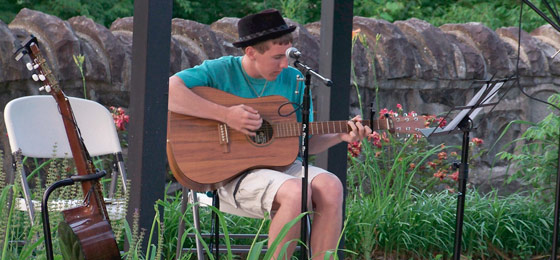
- The Gathering in the Gap Music Festival: Saturday of Memorial Day weekend. The festival celebrates the rich tradition of old-time and bluegrass music found in Southwest Virginia. Activities include competitions, workshops, jams and performances by regional and national musicians.
- Festival of Trees: Mid-November through Dec. 31. More than 80 trees, decorated by members of the community's civic organizations, businesses and schools, are displayed throughout the museum.
The museum displays rotating and outreach exhibits throughout the year. Email or call (276) 523-1322 for a calendar of events. Visit the Friends of the Museum Facebook page for more information about museum programs and services.
Click here to view all parks' events, festivals, workshops and interpretive programs.
CONCESSIONS
Gift shop.
HISTORY
The museum is housed in a mansion built in the 1890s by Rufus Ayers, a Virginia attorney general. The museum was bequeathed to the commonwealth in 1946 by C. Bascom Slemp, a private secretary to President Calvin Coolidge and a member of the U. S. Congress. The state officially dedicated the museum in 1948. It features a collection of more than 60,000 pieces, of which only a small fraction are on display at any given time. The museum chronicles the exploration and development of the region during the pioneer period of the 1700s and the coal boom of the 1890s. It offers activities for kids, scout and school programs, workshops, an annual Festival of Trees program, a quilt show, a music festival and outdoor exhibits. A gift shop at the museum features Victorian-era and pioneer items, local crafts, a large selection of books and Virginia State Parks products. The Victorian Parlor there is available for rent for business and social occasions.
The museum tells the story of the 1890s coal boom and chronicles the early exploration and settlement of the region. By the mid-1700s, settlers looking for a fresh start were traveling south out of Pennsylvania and Maryland into the valley of Virginia. In 1775 Daniel Boone pushed the Wilderness Road through Cumberland Gap, opening the way west. The flow of immigrants into and through southwestern Virginia increased dramatically.
Braving the unknown, pioneer settlers were almost totally dependent on the land, their own skills and the contents of their wagon for their every need. Displays of tools, household furnishings, quilts and early commerce tell the story of these hardy pioneers. There are also displays about the area's coal mining booms and busts, and an interactive kiosk features life and labor in the coal camps.
FRIENDS GROUP
The Friends of the Southwest Virginia Museum is a 501(c)(3) organization. As a Citizens Support Organization (CSO), it identifies and promotes activities to conserve, enhance, and interpret the cultural and historic resources of the museum. Click here to learn more about the group and its activities.
MASTER PLAN
Master plans must be written for parks before they're built. The plans are updated at least once every 10 years thereafter. The plans cover the size, types, infrastructure and locations of facilities as well as the site's special features and resources. Three public meetings are held during the initial development of each plan. Click here for this park's master plan.
Events, Programs
- 02/02/2026 - Southwest Virginia Museum Historical State Park Friend Meetings
- 02/14/2026 - Birding In The Gap Series
- 03/01/2026 To 03/22/2026 - True Art Showcase
- 03/01/2026 To 03/22/2026 - Stitch in Time Quilt Show
- 03/02/2026 - Southwest Virginia Museum Historical State Park Friend Meetings
- More events at this park.

Blogs
- A holiday tradition rooted in history: Festival of Trees at Southwest Virginia Museum
- Triple delight: How to see holiday lights at 3 parks in one weekend
- Holiday shopping at Virginia State Parks
- Where to see holiday lights at Virginia State Parks
- 15 fall festivities at Virginia State Parks
- More blogs about this park.
At a Glance